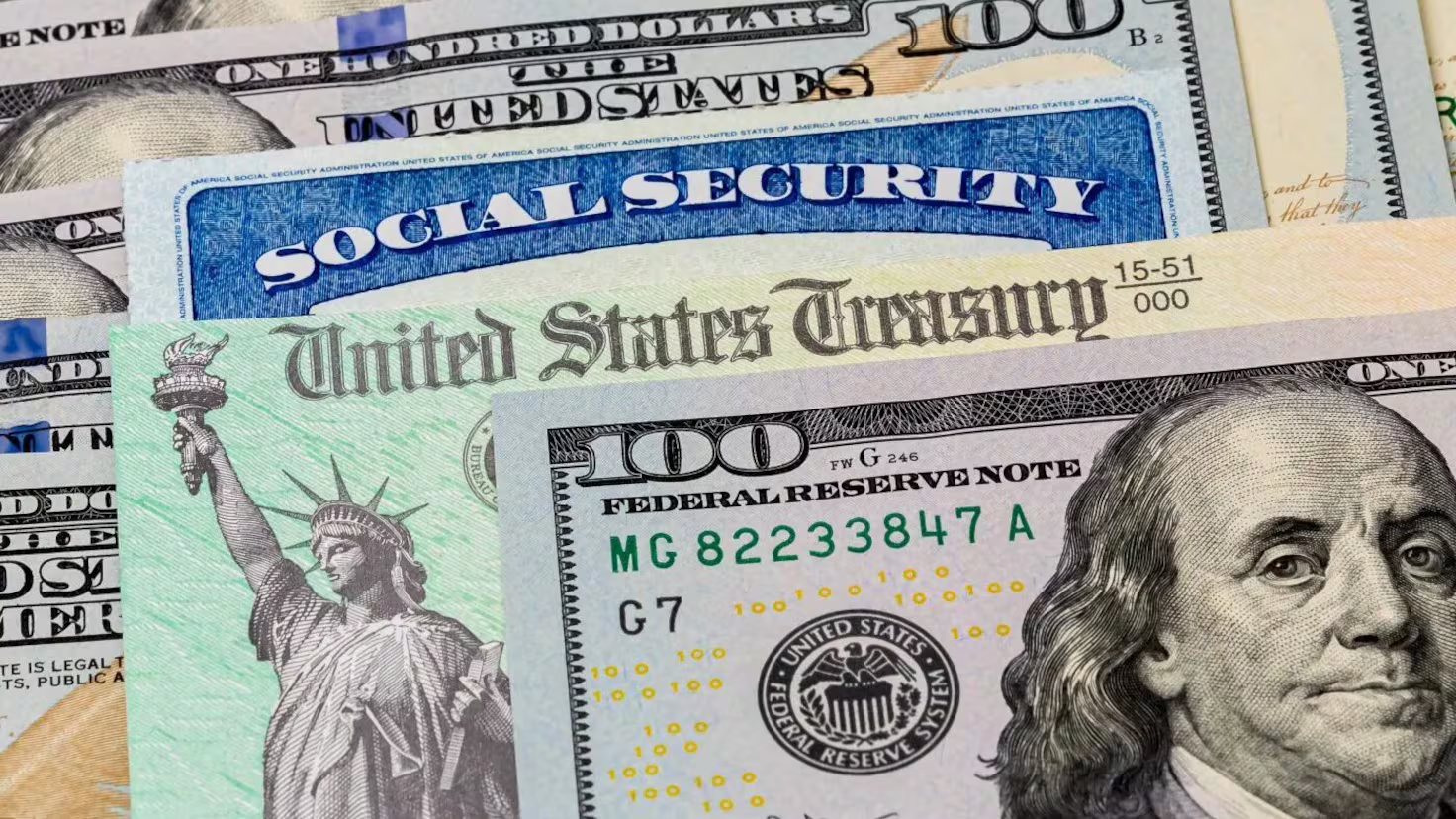
Millions of Americans will receive double Social Security payments this week, creating widespread questions about who qualifies, when the payments arrive, and why the schedule changed. The increase isn’t a bonus or stimulus; instead, it’s the result of how the Social Security Administration structures its calendar for beneficiaries whose payment dates are shifting due to weekends and federal holidays.
Why Two Payments Are Arriving in the Same Week
The Social Security Administration follows a predictable schedule — monthly checks typically arrive on the second, third, or fourth Wednesday depending on the beneficiary’s birthdate. However, when a scheduled payment falls on a weekend or federal holiday, Social Security advances the payment to the prior business day.
This week’s double payment occurs because the upcoming month’s disbursement date falls on a non-business day. Rather than delaying payments, the SSA issues the next month’s check early, resulting in two payments during the same week.
This scheduling pattern has occurred before, including earlier in the year during the spring benefits shift, which was covered in EOSel’s reporting on guaranteed-income timing changes in $725 Monthly Checks Until 2026.
Who Will Receive Double Payments
Not every Social Security recipient receives two payments this week. Eligibility depends on program and enrollment type:
• Supplemental Security Income (SSI) recipients receive two payments when the next month begins on a weekend or holiday.
• Beneficiaries receiving both SSI and Social Security often get two payments during scheduling shifts.
• Retirement and Disability beneficiaries (SSDI) typically receive their regular single monthly payment unless they are dual-qualified.
People who receive only Social Security retirement or SSDI will not receive two payments this week. The shift applies primarily to SSI and dual-benefit households.
Payment Dates for This Week
The SSA has confirmed that the earlier payment posts before the weekend or federal holiday, and the second payment posts on the normal SSI schedule. Direct deposit recipients usually receive funds first, while paper-check recipients may see delays depending on USPS delivery times.
Internal payment advisories from the SSA indicate that most direct deposits will hit accounts between Monday and Wednesday, with no action required from beneficiaries.
How Much Money Will Be Deposited
The payment amount varies based on benefit calculations and household type. For 2025, the average SSI monthly benefit — including the 3.2 percent COLA increase — is approximately:
• $943 for individuals
• $1,415 for eligible couples
• $472 for essential persons
Recipients will receive the same benefit amount twice within the same week. There is no reduction the following month — the double payment represents a schedule shift, not a future deduction.
More detailed breakdowns of 2025 benefit estimates are publicly available on the Social Security Administration’s payment index at ssa.gov.
How to Confirm You’re Getting Two Payments
Beneficiaries can confirm eligibility using any of the following:
• The My Social Security portal
• The SSI benefit letter or recent payment schedule notice
• Direct deposit notifications through online banking
• SSA phone support for paper-check recipients
According to SSA officials, beneficiaries do not need to request or apply for the double payment. If the system recognizes eligibility, funds will be released automatically.
What Recipients Should Keep in Mind
Although two payments arrive this week, there will be no payment at the beginning of next month for those same beneficiaries. The timing shift brings payments forward rather than increasing total benefits.
Financial planners encourage recipients to treat the double deposit as a schedule change rather than an increase, especially for households using automated bill payments or budgeting tools.
This same advice has appeared in economic-stability research highlighted previously in EOSel’s article on New York Rolls Out Huge Tax Rebates, which reported that sudden schedule changes can influence spending habits if households mistake timing adjustments for income boosts.
Why These Timing Shifts Happen Every Year
Double payments occur because SSI is usually paid on the first of the month, and the SSA will not deposit funds on:
• Weekends
• Federal holidays
• Bank-closure days
To prevent delays that could create hardship for vulnerable households, the SSA pays early rather than late. This scheduling rule has existed for decades and is expected to continue in 2026 and beyond.
Conclusion
Millions of SSI and dual-benefit recipients will see two Social Security payments in the same week, not because of a bonus or stimulus payment, but due to the government’s early-release calendar rules. For households relying on Social Security to cover rent, groceries, and medical costs, the timing shift is important to understand. Managing the double deposit correctly can help prevent financial gaps later in the month when the next payment does not arrive.